Choosing Custom Color Contact Lenses for a brand is not just a color decision. It is a product, comfort, and trust decision. A warm hazel design may look vivid on a pale sample card yet disappear against a dark iris. The same pigment can also appear different in daylight and indoor lighting. Test finished lenses, not just digital mockups.
Contact-lens researcher Dr. Jason J. Nichols offers a useful evidence-led perspective. The following is a paraphrase, not a verbatim quotation: “Color may attract attention, but fit and eye health earn lasting trust.” Keep that principle close when comparing opacity, printed patterns, lens materials, and wear options. A striking limbal ring means little if the design feels uncomfortable or obscures clear vision.
Details matter. Review how the color sits over different iris shades, whether the pattern looks natural at conversational distance, and how consistently samples match across production. Ask suppliers for product specifications, quality documentation, and clear care guidance. Have qualified eye-care professionals assess fit and suitability; appearance alone cannot establish either. Small checks. Fewer surprises.
This guide will help your team compare design goals with practical product requirements, then prepare better questions for manufacturers. Some trade-offs may remain. A subtle shade can look refined but barely register in photos; a brighter print may feel less natural in person. That tension deserves testing, not guesswork. Use real wear feedback, document what changes, and be willing to revise the first idea.
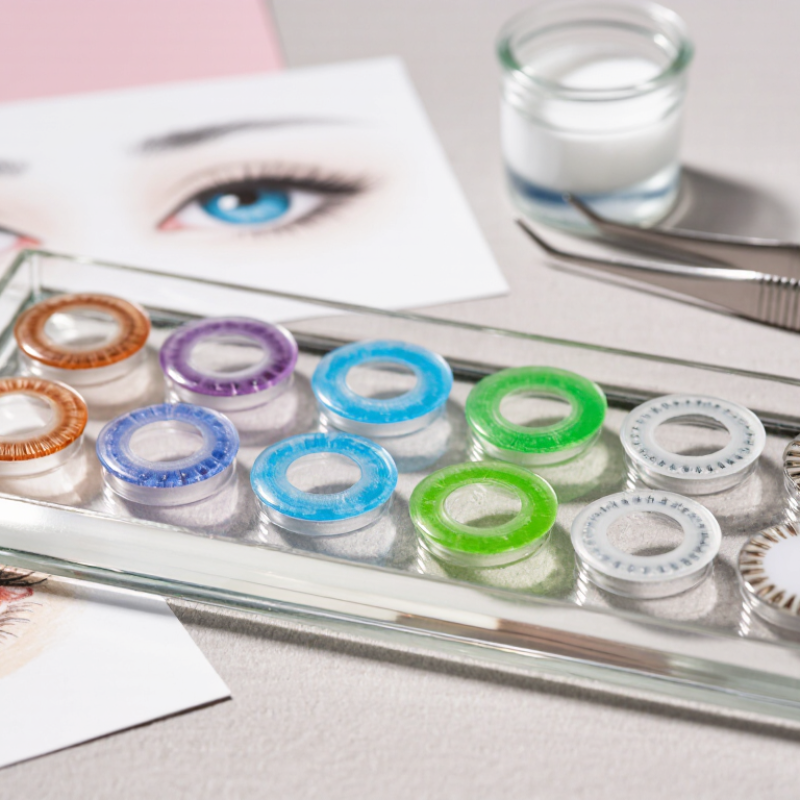
Before choosing custom color contact lenses, define what your brand should make people feel. A soft gray may suggest understated elegance, while vivid violet can feel playful or theatrical. These impressions are not universal, so test color samples under daylight and warm indoor lighting. A shade that looks subtle in a studio may appear much brighter outdoors. Be honest about that difference.
Your audience matters just as much as your visual concept. Consider where customers expect to wear the lenses, how often they may use them, and whether they prefer natural-looking enhancement or a more noticeable change. A first-time wearer may value clear wear instructions and realistic product images. A creative professional may care more about distinctive colors and consistent results across batches. Avoid assuming one design suits everyone. I have seen that assumption lead to confusing product ranges.
Tips: Write a short profile of your intended customer, including their style preferences and typical setting. Share color references with a qualified lens manufacturer, then review physical samples rather than relying only on screen previews. Ask a qualified eye-care professional to review material and wear-related information. Keep records of approved shades and sample conditions. Small details matter. If feedback conflicts, pause and investigate instead of forcing a quick decision.
| Brand Identity Direction | Potential Target Audience | Desired Appearance | Color and Design Direction | Product and Communication Priorities | What to Validate Before Launch |
|---|---|---|---|---|---|
| Natural and understated | People seeking a subtle change for everyday wear, including first-time cosmetic lens shoppers | A softly enhanced iris that remains believable in ordinary settings | Muted brown, hazel, gray, or green tones; a gradual color transition; a restrained limbal ring | Show the lenses on a range of natural eye colors and in different lighting; explain the intended level of visible change | Check color appearance across iris colors, pupil sizes, and lighting conditions; assess comfort and fit through qualified professional evaluation |
| Fashion-led and expressive | Style-conscious adults who coordinate eye color with makeup, clothing, or seasonal looks | A noticeable but wearable style statement | Distinctive gray, blue, green, or warm-toned palettes; defined patterns with controlled contrast | Use clear product photography, accurate color descriptions, and styling examples without implying that images guarantee identical results for every wearer | Test sample designs on varied eye colors and review how the lens looks in daylight and indoor lighting |
| Creative and theatrical | Cosplay participants, performers, and customers creating character-based looks | A dramatic transformation for planned events or performances | High-contrast patterns, vivid colors, or character-inspired designs, subject to applicable product requirements | Communicate intended use, wearing instructions, and the importance of professional fitting; avoid suggesting that a dramatic design is suitable for every situation | Confirm visibility, fit, and applicable safety and labeling requirements; do not assume a decorative lens is safe simply because it is sold for costume use |
| Inclusive and everyday-focused | Adults with varied natural eye colors, skin tones, style preferences, and vision-correction needs | A choice of subtle or visible enhancement that works across different starting points | A balanced shade range, with design options that account for how the same lens may appear differently on light and dark irises | Represent diverse wearers in product imagery and provide transparent information about available prescriptions, where offered | Review fit and appearance with a diverse wearer panel; confirm that prescription availability and product claims match local regulations |
| Premium and quality-focused | Customers who prioritize clear product information, consistent presentation, and a refined shopping experience | A polished finish with dependable shade presentation and well-explained product details | Refined natural or fashion colors; a cohesive collection with consistent naming and design principles | Prioritize material, replacement schedule, care instructions, packaging clarity, and responsive customer support | Verify specifications with the manufacturer and ensure that labeling, instructions, and claims are accurate for each market |
Planning note: Treat audience preferences as hypotheses to validate through customer research and product testing. Contact lenses, including decorative lenses, may be regulated as medical devices; requirements vary by market. Consult qualified eye-care professionals and check local regulations before making product or safety claims.
Ask for oxygen permeability, water content, and surface-quality data. Confirm pigments sit within the lens material and outside the optical zone. Check them in ordinary room light. Studio lights can flatter everything.
Request records for biocompatibility testing, sterilization, packaging integrity, shelf life, and batch traceability. Check that reports match the exact lens design and material. Similar documents may not apply.
Requirements can vary by market and may affect labeling, registration, and distribution. Confirm current details with the relevant authority or a qualified professional. Keep records. Match product names and specifications across documents.
Test shades in daylight and indoor lighting, and against different iris colors. Record the base color, printed pattern, and edge definition. Small changes can look surprisingly dramatic.
A photograph cannot show every detail. Compare a physical sample with its approved color reference under consistent lighting. Check the label on the actual package, too.
Allow clear space for batch identification, storage instructions, and other market-specific details confirmed by your compliance team. Check material compatibility with the product and sterilization process. Readability matters.
Start with a small pilot. Get minimum order quantities and lead times in writing, then allow for quality rejects and realistic reorder timing. Early forecasts can be too neat.
Review documented specifications, physical samples, and quality checks. Confirm the package and lens details match your records. Pause if anything is unclear. A sales promise is not a test report.
Choosing Custom Color Contact Lenses for your brand begins with a clear understanding of your identity and target audience. Consider the colors, styles, and design details that suit your customers, along with the lens types that best match their preferences and intended use. A focused product concept can help guide decisions about appearance, comfort, and functionality.
Before committing to production, review lens materials, safety documentation, applicable regulatory requirements, and quality-control processes. Request samples and assess their color consistency, fit, finish, and overall quality. Finally, confirm customization options, packaging details, minimum order quantities, and production timelines with potential manufacturers. Careful planning at each stage can help you develop a distinctive, reliable product while setting realistic expectations for cost, quality, and delivery.

 Vibe Lenses