How to Choose the Best Gradient Color Contact Lenses?

Time:2026-10-27 Author:Aria
0%

Choosing the right Gradient Color Contact Lenses involves more than matching a color to your outfit. Comfort, eye health, material quality, and realistic appearance should guide your decision. A lens may look beautiful online but appear darker under indoor lighting. It may also feel different after several hours of wear.

Start with a professional eye examination, even if you do not need vision correction. An optometrist can assess your prescription, corneal shape, tear film, and suitability for contact lenses. Choose products supplied by reputable sellers and approved by relevant health authorities. Check the base curve, diameter, replacement schedule, and ingredient information carefully. Decorative lenses are still medical devices in many regions. They should never be purchased without proper fitting.

Think about the gradient design itself. Soft transitions usually create a more natural effect, especially when the lens blends with your iris. Stronger gradients can produce a dramatic look, but they may feel less subtle in daylight. Compare product images with real customer photos when possible. Still, photos can be edited, so do not trust them completely.

Hygiene matters every time. Wash and dry your hands before handling the lenses. Never share them, sleep in them, or use tap water for cleaning. Follow the manufacturer’s instructions and replace the storage case regularly. Stop wearing them if you notice pain, redness, blurred vision, or unusual sensitivity. Contact lenses should enhance your appearance, not challenge your eye health. The perfect color is not always the safest fit.
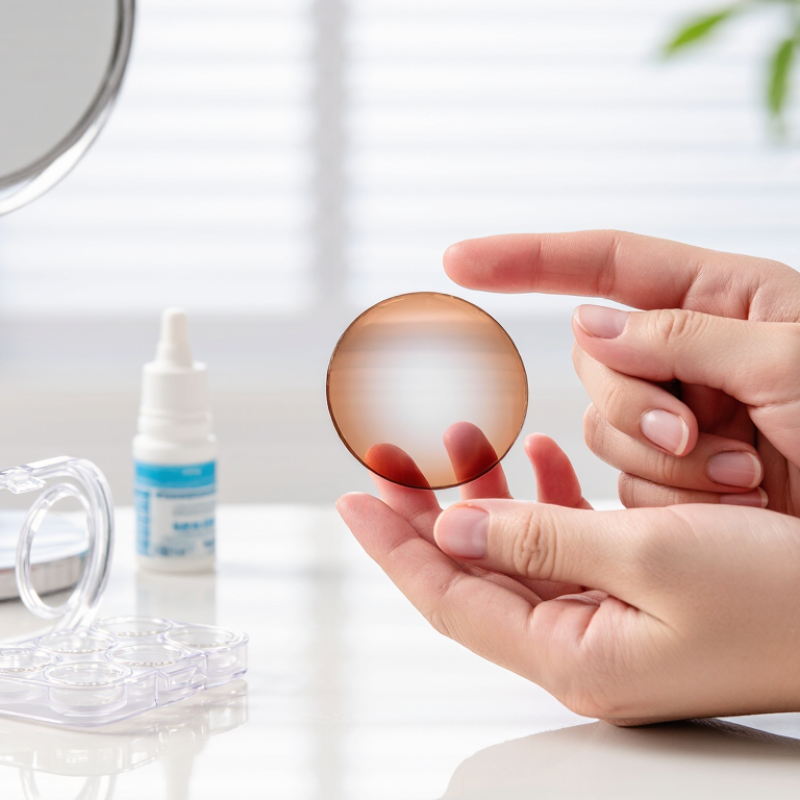
How to Choose the Best Gradient Color Contact Lenses?

Understanding Gradient Color Contact Lens Designs

Understanding Gradient Color Contact Lens Designs

Gradient color contact lenses use several tones instead of one solid shade. The color usually fades from a darker outer ring to a softer inner area. This design can make the iris look larger and more dimensional. Some lenses use a defined limbal ring, while others create a nearly invisible transition. The result depends on the pattern, opacity, pupil opening, and natural eye color.

The CDC estimates that about 45 million people in the United States wear contact lenses. The FDA also classifies decorative lenses as medical devices requiring professional fitting and a prescription. These facts matter because visual appeal cannot replace optical safety. A well-designed gradient should keep the pupil zone clear during normal lighting changes. It should also match the wearer’s base curve and eye movement. In practice, a dramatic edge may look attractive in photos but feel unnatural outdoors. I have found that subtle layering often appears more convincing, though personal taste still complicates the choice.

Tips: Compare the lens beside your bare eye in daylight. Check the outer ring, not only the center color. Ask an eye-care professional to assess movement and comfort. Review the manufacturer’s material and replacement guidance. EuromContact market reports show continued growth in daily disposable lens use, reminding shoppers that replacement habits influence hygiene. I still think design descriptions can be vague. “Natural” is not a clinical measurement. Look for clear specifications, and question unclear claims.

Choosing Colors That Match Your Eyes and Personal Style

A gradient color contact lens should complement your natural eye color, not hide it completely. Light eyes often suit soft blends of honey, gray, blue, or green. Darker eyes may need richer tones, such as warm brown, hazel, or deep olive. The final shade can change under sunlight, office lighting, or phone camera exposure.

Think about your personal style before choosing intensity. A subtle gradient works well with neutral clothing and everyday makeup. A stronger blend may suit creative outfits or evening events. Your hair color matters too. Warm hair tones often pair naturally with amber or olive shades. Cool hair colors can balance with gray, blue, or muted violet. Keep the transition soft if you want a believable appearance.

Do not judge lenses from an online image alone. Screen colors are unreliable. An optometrist should check your eye health, prescription, and lens fit before use. Decorative lenses still need careful handling and proper hygiene. Never share them, sleep in them, or wear them through irritation. I once assumed a dramatic color would look better, but it felt less natural than expected. That changed my approach. Test a gentler shade first, and notice how it fits your face, wardrobe, and confidence. Personal style is not always predictable. That is part of the process.

Checking Lens Materials, Prescription, and Fit

How to Choose the Best Gradient Color Contact Lenses?

Gradient color contact lenses should look attractive, but appearance is only one part of a safe choice. Lens material matters because it affects oxygen flow, moisture, and wearing comfort. Hydrogel lenses may feel soft, while silicone hydrogel materials often allow more oxygen to reach the cornea. However, material alone does not guarantee comfort. Dry air, long screen time, and individual eye sensitivity can change the experience.

Prescription accuracy is essential, even for plano cosmetic lenses. An eye-care professional should check your sphere, cylinder, axis, base curve, and diameter. A lens that is too tight may leave noticeable redness. A loose lens may move when you blink. The gradient tint does not correct a poor fit. It only changes the visual effect. The tempting mistake is choosing a lens from a photo without checking these measurements.

Tips: Wash and dry your hands before handling lenses. Follow the recommended replacement schedule. Never sleep or swim in lenses unless specifically approved by a professional. Remove them if you notice pain, unusual redness, discharge, or blurred vision. Comfort can be misleading at first; a lens may feel fine for ten minutes but become irritating later. Recheck the fit instead of forcing yourself to adapt.

How to Choose the Best Gradient Color Contact Lenses? - Checking Lens Materials, Prescription, and Fit

Selection Dimension Relevant Specification What to Check Practical Guidance
Lens Material Hydrogel or silicone hydrogel Hydrogel lenses contain water to transmit oxygen through the lens. Silicone hydrogel lenses generally allow higher oxygen transmission, although comfort also depends on surface treatment, design, and wear time. For frequent or longer daily wear, ask an eye-care professional whether a silicone hydrogel option is suitable. Do not sleep in lenses unless specifically approved for that product.
Water Content Usually listed as a percentage Higher water content can initially feel comfortable, but some high-water lenses may lose moisture more quickly during prolonged wear or in dry environments. Choose based on your tear film, climate, screen use, and professional fitting advice rather than selecting the highest percentage automatically.
Oxygen Performance Dk/t value, when provided Dk/t describes oxygen transmissibility through the finished lens and is influenced by both material and lens thickness. A higher value does not guarantee that every wearer will experience better comfort. Use the manufacturer’s verified specification and follow the prescribed wearing schedule. Remove lenses if pain, redness, or blurred vision occurs.
Prescription Power Sphere (SPH) and, when needed, cylinder and axis Prescription color lenses must match the current eye examination. Astigmatism may require a toric design, while reading needs may require a multifocal design. Never convert glasses power to contact-lens power by guesswork, especially for stronger prescriptions. A licensed professional should determine the final contact-lens prescription.
Plano Option 0.00 power Plano lenses correct no refractive error but still sit directly on the cornea and can cause complications if poorly fitted, contaminated, or worn incorrectly. Even non-prescription gradient lenses require an eye examination, a proper fitting, and a valid prescription where required by local regulations.
Base Curve Common soft-lens values are approximately 8.4–8.8 mm The base curve describes the back curvature of the lens. The correct value depends on corneal shape, lens geometry, movement, and edge design; it is not interchangeable across all lens models. Do not choose a base curve only because it matches a previous lens. The lens should move slightly with blinking without excessive movement, tightness, or decentration.
Diameter Common soft-lens diameters are approximately 14.0–14.5 mm Diameter affects coverage, centration, movement, and the visible size of the iris. A larger cosmetic diameter is not automatically more comfortable or safer. Confirm that the lens fully covers the cornea during blinking and does not shift excessively when looking in different directions.
Gradient Color Design Color placement, opacity, limbal ring, and pupil opening A gradient pattern should transition smoothly from the colored area toward the pupil. The printed or tinted area must not obstruct vision, especially in changing light conditions. Check the lens in bright, normal, and low-light environments. Stop wearing it if the color pattern causes persistent halos, glare, or blurred vision.
Replacement Schedule Daily disposable, two-week, monthly, or other approved schedule The replacement period is determined by the lens design and labeling, not by how clean the lens appears. Reusing a daily lens is not equivalent to using a reusable lens. Follow the labeled schedule exactly. Replace the storage case regularly for reusable lenses and never top off old solution.
Fit and Movement Centration, blink movement, comfort, and corneal coverage A well-fitted soft lens generally centers on the eye, moves slightly with blinking, and does not feel painfully tight or repeatedly fall out. A professional fitting should include an assessment of vision, comfort, lens movement, and the condition of the cornea after wear.
Packaging and Hygiene Sealed blister, expiry date, lot information, and care instructions The package should be intact and within its expiry date. Lenses should be handled with clean, dry hands and kept away from tap water and saliva. Do not use a damaged, dried-out, torn, or contaminated lens. Use only the recommended disinfecting solution for reusable lenses.
Wear Safety Daily wear duration and approved activities Swimming, showering, sleeping, and exposure to dust increase the risk of contamination or complications. Redness, pain, light sensitivity, discharge, or sudden vision changes require prompt attention. Remove lenses before sleeping or water exposure unless explicitly instructed otherwise by an eye-care professional. Seek urgent eye care for severe or persistent symptoms.

Specifications such as base curve, diameter, prescription range, water content, and oxygen transmissibility vary by lens design. Always verify the product labeling and obtain a current fitting from a qualified eye-care professional before wearing gradient color contact lenses.

Evaluating Comfort, Vision, and Wearability

Gradient color contact lenses should feel almost unnoticeable during normal wear. Comfort is not a luxury; it affects how safely and consistently you can wear them. Look for lenses made with breathable materials and a moisture-friendly surface. Still, material claims do not guarantee personal comfort. A lens may feel smooth in the morning but become irritating after several hours. Pay attention to dryness, redness, stinging, and a gritty feeling. These are useful warning signs.

Vision requires more than choosing an attractive color. The gradient should leave the pupil area clear enough for steady focus in different lighting conditions. Check whether your sight changes when you blink, look sideways, or move from indoors to bright daylight. Blurred edges and halos can make driving or reading uncomfortable. A qualified eye-care professional should check the fit, prescription, and eye health before wear. Decorative lenses can still require proper fitting and a valid prescription, depending on local rules.

Wearability also depends on routine. Wash and dry your hands before handling lenses, and follow the recommended replacement schedule. Never share lenses or sleep in them unless specifically approved by an eye-care professional. A quick mirror check is not enough. No fitting checklist is perfect, and personal comfort can change with allergies, screen time, or dry weather. Stop wearing the lenses if discomfort continues, and seek professional advice rather than forcing your eyes to adapt.

Following Safe Buying, Wearing, and Care Practices

How to Choose the Best Gradient Color Contact Lenses?

Following Safe Buying, Wearing, and Care Practices

When choosing gradient color contact lenses, examine the fade, edge, and overall opacity. A soft transition often looks more natural under daylight. Yet appearance should never outweigh eye health.

Have the lenses fitted by a qualified eye-care professional. A prescription matters. Buy only from a regulated seller that requests current prescription details. Check the sealed package, expiry date, lens specifications, and instructions. Avoid unverified online listings, even when prices seem attractive.

Wash and dry your hands before touching the lenses. Dry hands help prevent slipping and contamination. Never rinse lenses with tap water, saliva, or homemade solutions. Insert each lens carefully and check for tears, dust, or an inside-out shape.

Do not share lenses with anyone. Remove them before sleeping, showering, or swimming. This routine can feel inconvenient. It is still safer than risking irritation or infection.

Store lenses in fresh, approved solution inside a clean case. Replace the case regularly, and never “top off” old solution. Follow the replacement schedule, even if the lenses look fine.

A busy morning can make careful habits harder. That is where mistakes happen. If you notice pain, persistent redness, blurred vision, swelling, or unusual discharge, remove the lenses and contact an eye-care professional promptly. Do not keep wearing them to test whether symptoms fade.

FAQS

What are gradient color contact lenses?

They use several tones instead of one solid shade. The color often fades from a darker outer ring to a softer center. This can make the iris look larger and more dimensional.

How can I choose a natural-looking gradient design?

Compare the lens with your bare eye in daylight. Check the outer ring, center color, opacity, and fade. A soft transition usually looks less artificial outdoors. Still, “natural” remains vague.

Does my natural eye color affect the result?

Yes. Natural eye color changes how the gradient appears. A dark iris may reduce the visible tint. A lighter iris may show stronger color differences. Photos can mislead you.

Why does prescription and fit matter for cosmetic lenses?

Cosmetic lenses still require accurate measurements and professional fitting. Important details include prescription, base curve, and diameter. A tight lens may cause redness. A loose lens may move during blinking. Fit matters more.

Which lens materials may improve comfort?

Material affects oxygen flow, moisture, and wearing comfort. Some silicone-based materials allow more oxygen to reach the cornea. Soft hydrogel materials may feel comfortable initially. However, material alone cannot guarantee comfort.

How should I handle gradient contact lenses safely?

Wash and dry your hands before touching the lenses. Inspect each lens for dust, tears, or an inside-out shape. Never rinse lenses with tap water or saliva. Do not share them.

When should I remove the lenses?

Remove them before sleeping, showering, or swimming unless specifically approved. Remove them immediately for pain, blurred vision, swelling, or unusual discharge. Persistent redness needs professional attention. Do not “wait and see.”

How should I store and replace the lenses?

Store them in fresh, approved solution inside a clean case. Replace the case regularly. Never add new solution to old solution. Follow the replacement schedule, even when lenses look clean. Busy mornings cause mistakes.

Conclusion

Choosing the best Gradient Color Contact Lenses begins with understanding how their blended tones and transition effects are designed. Consider whether you prefer a subtle enhancement or a more noticeable change, then select colors that complement your natural eye shade, skin tone, and personal style. The right pair should enhance your appearance while still looking balanced and comfortable for everyday use.

Before purchasing, check the lens material, available prescription options, diameter, and base curve to ensure a suitable fit. Comfort, clear vision, moisture retention, and stable positioning are essential for enjoyable wear. Always buy from a reliable, legally authorized source, follow professional fitting advice, and observe the recommended wearing schedule. Handle lenses with clean hands, use appropriate care solution, avoid sharing them, and replace them as directed. If you experience pain, redness, blurred vision, or unusual irritation, remove the lenses and seek professional eye-care guidance promptly.

Aria

Aria

Aria is a dedicated marketing professional with a deep passion for innovative strategies and a keen understanding of our company's product offerings. With a wealth of experience in the industry, Aria excels at crafting engaging content that highlights the unique features and benefits of our......