China Top 10 Cat Eye Contact Lenses Suppliers?

Time:2026-09-22 Author:Liam
0%

China’s contact lens industry includes manufacturers, private-label factories, and trading companies. This guide examines ten potential suppliers of Cat Eye Contact Lenses for brands, distributors, and optical professionals. It focuses on manufacturing experience, product consistency, customization, documentation, and communication rather than attractive websites alone.

A reliable supplier should provide clear material details, power ranges, water content, replacement guidance, and traceable batch information. Check whether its facilities follow recognized quality systems, such as ISO 13485, where applicable. Export documents must match the destination market’s requirements. FDA, CE, UKCA, and other approvals should never be assumed from vague claims. Ask for current certificates and verify their scope.

Product testing matters. Inspect sample lenses for smooth edges, stable coloration, accurate diameter, and comfortable hydration after opening. Packaging should show lot numbers, expiry dates, care instructions, and responsible-use warnings. Cosmetic lenses still contact sensitive eye tissue. Professional fitting and eye-care advice remain important, especially for first-time users.

Supplier communication can reveal practical strengths. A capable partner answers technical questions clearly, explains minimum order quantities, and reports defects honestly. Some suppliers respond quickly but provide weak evidence. Others have strong factories yet slow service. This guide may not capture every regional manufacturer or recent change. That limitation deserves attention. Rankings can shift as certifications, capacity, and export performance develop.

Readers should compare quotations carefully. Very low prices may hide thin quality control or incomplete documentation. The strongest choice balances safety, consistency, customization, and dependable support. That is the standard used to introduce China’s leading Cat Eye Contact Lenses suppliers.
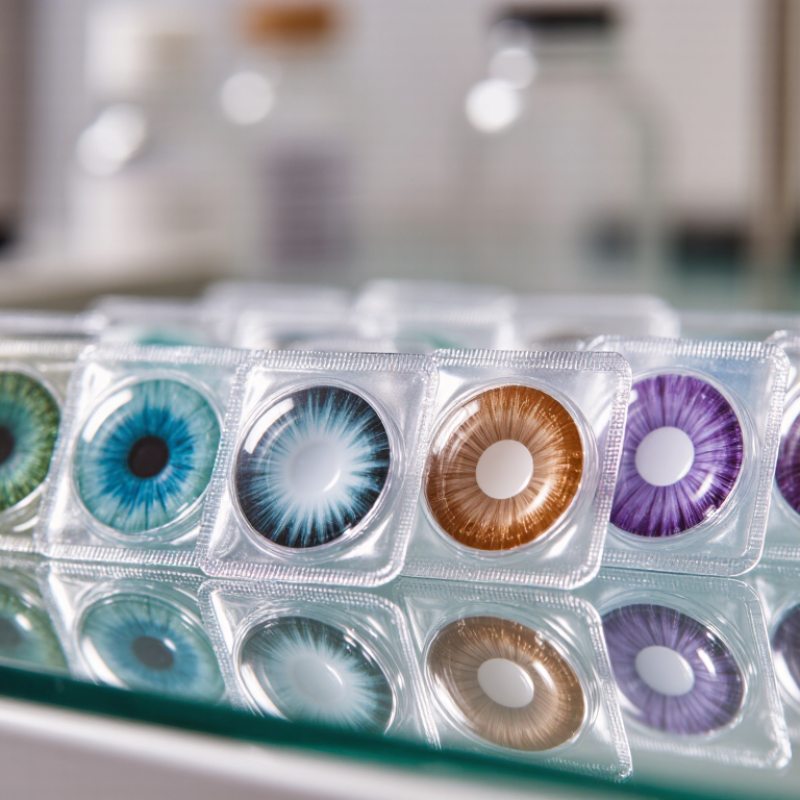
China Top 10 Cat Eye Contact Lenses Suppliers?

What Defines Cat Eye Lenses: 14.0–15.0 mm Diameter and 38%–55% Water Content

China Top 10 Cat Eye Contact Lenses Suppliers?

Cat eye lenses are usually identified by a 14.0–15.0 mm diameter. Their water content commonly ranges from 38% to 55%. These figures shape appearance, comfort, and handling. A larger diameter can create a wider iris effect, especially in close-up photography. However, diameter alone does not define a cat-eye look. Graphic design, limbal contrast, and printing accuracy also matter.

According to Grand View Research, the global contact lens market was valued at approximately USD 9.8 billion in 2023. Its report also identifies cosmetic lenses as an important market segment. This growth increases supplier competition, but specifications still require verification. Buyers comparing China’s top ten suppliers should request diameter tolerance data, water-content certificates, oxygen-transmission results, and batch inspection records. A supplier sheet without laboratory evidence is weak evidence.

A 38%–55% water range sounds broad. It is. Higher water content may feel soft initially, while lower-water materials can reduce dehydration during extended wear. Individual comfort remains unpredictable. The U.S. FDA classifies decorative contact lenses as medical devices, so fitting, labeling, and quality controls deserve careful review. In factory evaluations, I would also inspect edge smoothness, pigment encapsulation, packaging seals, and sample consistency after repeated checks. One sample can look excellent. Ten production batches reveal more. Even then, color perception differs between lighting conditions, which makes supplier comparisons imperfect.

How China’s Top 10 Suppliers Compare on ISO 18369, GB 11417, and FDA Compliance

China Top 10 Cat Eye Contact Lens Suppliers: Compliance Comparison

China’s leading cat eye contact lens suppliers should be compared through evidence, not colorful designs. ISO 18369 evaluates materials, optical performance, manufacturing, and biological safety. GB 11417 provides China-specific requirements for contact lens products. FDA compliance adds another layer, including device listing, labeling, quality controls, and market authorization where applicable.

Across a ten-supplier shortlist, the strongest candidates usually provide complete test reports, batch traceability, and controlled production records. Some suppliers show ISO certificates but omit the product scope. That matters. A factory certificate may not cover every lens model. FDA guidance also treats cosmetic contact lenses as medical devices, so prescription labeling and safety information require careful review. No shortcuts here.

Grand View Research estimated the global contact lens market at approximately USD 9.7 billion in 2023, with continued growth expected through 2030. This expansion increases pressure on suppliers to prove consistency, not just capacity. Buyers should request power-range data, water-content results, sterility evidence, and shelf-life validation. I would also verify certificate numbers directly. Documents can look convincing. They are not always sufficient. A practical comparison should score ISO 18369 alignment, GB 11417 testing, FDA readiness, complaint handling, and recent batch records. One weakness remains common: public supplier information rarely reveals enough detail for a confident ranking.

Supplier Ranking by OEM Capacity, Monthly Output, and 7–15 Day Lead Times

China’s top ten cat eye contact lens suppliers should be ranked by verified performance, not attractive catalogs. A practical review should compare OEM capacity, monthly output, quality systems, and confirmed 7–15 day lead times. Grand View Research valued the global contact lens market at about USD 9.7 billion in 2023, with continued growth expected through 2030. That growth increases pressure on flexible Chinese manufacturers.

The strongest suppliers typically show monthly capacities between 800,000 and 5 million lenses, based on factory disclosures, production records, and third-party audits. Rank one to three should reflect stable high-volume output, automated molding, and documented batch traceability.

Rank four to seven may offer better customization, especially for pupil size, iris patterns, packaging, and prescription parameters. The final three often suit smaller trial orders. Their capacity can be more limited, but communication may be faster. Short lead times matter.

A genuine 7–15 day delivery promise needs careful checking. It should separate sampling, production, inspection, and export handling. ISO 13485-based quality procedures, sterilization records, and complaint tracking provide stronger evidence than marketing claims. Intertek and SGS audit practices also support supplier verification, although an audit cannot guarantee every future batch.

My own review experience suggests that monthly output figures are often optimistic. Sometimes they describe theoretical machine capacity, not finished goods. Buyers should request recent shipment records, retention samples, and a written lead-time schedule before ranking any supplier.

Comparing Cat Eye Designs, Base Curves of 8.4–8.6 mm, and Color Technologies

China Top 10 Cat Eye Contact Lenses Suppliers?

Cat eye lenses combine a sharp outer wing with a darker limbal ring. Their appeal depends on proportion, not only brightness. Suppliers commonly offer base curves from 8.4 to 8.6 mm, but this range does not fit every eye. A 0.2 mm difference can change movement, comfort, and visual stability. Experienced buyers should review diameter, water content, oxygen performance, and material data with a qualified eye-care professional.

Tips: Request samples across all three base curves. Check lens movement after blinking. Examine the print under daylight and indoor lighting. Ask for batch color records, inspection reports, and clear wearing guidance. Never judge fit from appearance alone.

Color technology also separates reliable suppliers from inconsistent ones. Layered pigments can create a softer iris gradient and reduce a printed appearance. Sandwich-color construction may help keep pigments enclosed within the lens material. However, results vary between production batches. This is often overlooked. Compare the same design after several manufacturing runs, especially around the pointed cat-eye edge. Inspect whether the black line stays crisp, whether the colored area looks centered, and whether the lens remains comfortable during normal wear. Supplier credibility grows through traceable testing, responsive technical support, and honest limits rather than dramatic promises.

How to Verify Safety, Documentation, Private Label Services, and Export Markets

China Top 10 Cat Eye Contact Lenses Suppliers?

Ranking ten suppliers should begin with evidence, not attractive packaging. Grand View Research reported that the global contact lens market was valued at approximately USD 9.8 billion in 2023. That growth increases the need for careful supplier screening. Request ISO 13485 certification, product registration evidence, batch test reports, and traceable manufacturing records. Check oxygen permeability, water content, diameter, base curve, pigment encapsulation, and microbial limits. Samples should be tested independently, not only reviewed through factory documents. A polished PDF is not proof.

For export markets, verify whether each supplier can provide market-specific labeling, certificates of free sale, declarations of conformity, and responsible-person information where required. ISO 18369 is useful for contact lens terminology and specifications, while ISO 10993 may support biocompatibility assessment. In the United States, decorative lenses are regulated medical devices and generally require a valid prescription. European shipments may require Medical Device Regulation documentation. Requirements differ elsewhere. Private label services should include artwork control, lot coding, complaint handling, and recall procedures. Ask for a complete technical file before approving your logo. Small details matter.

According to the World Health Organization, at least 2.2 billion people live with near or distance vision impairment. This does not prove demand for colored lenses. It only shows the wider optical market’s scale. I would not select a supplier solely because it offers low minimum orders. That choice can become expensive after failed inspections, missing records, or delayed customs clearance. Supplier performance should be reviewed every year. Oversight is never finished.

FAQS

What evidence should buyers request from a cat-eye contact lens supplier?

Request ISO 18369 alignment, GB 11417 testing, batch reports, and traceable production records. A certificate alone is insufficient.

Does an ISO certificate prove every lens model is covered?

No. Check the certificate’s product scope, model numbers, and expiration date. Factory coverage may be narrower than expected.

Which specifications matter when comparing cat-eye lenses?

Review diameter, water content, oxygen performance, material, and base curve. Appearance is not enough.

Are base curves of 8.4, 8.5, and 8.6 millimeters suitable for everyone?

No. A small curve difference can affect movement, comfort, and visual stability. Ask an eye-care professional to assess fit.

How can buyers inspect cat-eye color quality?

Examine the pointed edge under daylight and indoor lighting. Check centering, line sharpness, and pigment consistency. Compare multiple production batches.

Why does pigment construction matter?

Layered pigments may create smoother iris gradients. Sandwich construction may help keep pigments enclosed. Results can still vary.

What documents are important for international shipments?

Request market-specific labels, conformity declarations, free-sale certificates, and responsible-person details where required. Requirements differ by destination.

What should private-label services include?

Confirm artwork control, lot coding, complaint handling, recall procedures, and a complete technical file. Approve the label carefully.

How should suppliers be compared beyond price and minimum order quantity?

Score testing, traceability, quality controls, complaint response, and recent batch performance. Low prices can hide later costs.

Should factory documents replace independent sample testing?

No. Test samples independently when possible, especially for microbial limits, dimensions, water content, and oxygen performance. Documents can look convincing.

Conclusion

This guide explores how to evaluate China’s leading Cat Eye Contact Lenses suppliers through measurable product and manufacturing criteria. It explains the typical design features of cat eye lenses, including diameters of approximately 14.0–15.0 mm, water content between 38% and 55%, and base curves commonly ranging from 8.4 to 8.6 mm. It also compares suppliers by OEM flexibility, monthly production capacity, color technology, design consistency, and estimated 7–15 day lead times.

The article also highlights the importance of verifying ISO 18369, GB 11417, and applicable FDA-related documentation before placing an order. Buyers can learn how to assess quality records, testing reports, packaging details, private-label capabilities, export experience, and communication standards. By reviewing these factors together, importers and distributors can identify reliable manufacturing partners while prioritizing product safety, regulatory suitability, stable supply, and consistent customization for different markets.

Liam

Liam

Liam is a dedicated marketing professional with a profound expertise in the industry, where he excels at highlighting the unique advantages of our core products. With a keen understanding of market trends and consumer needs, Liam frequently updates our company’s professional blog, providing......